Language / Culture & knowledge

Who will make AI work for Greek knowledge?

Speaking Greek is a start. Understanding a technical manual, local history or a public-service term—with traceable sources—is a different standard.

The following are published positions brought together by AIStrategy. They are not answers given to this page’s question or a transcript of a shared panel. Our synthesis and next questions follow below.

THOUGHTLEADERS.GR / THE PERSPECTIVES

Start with what has actually been said.

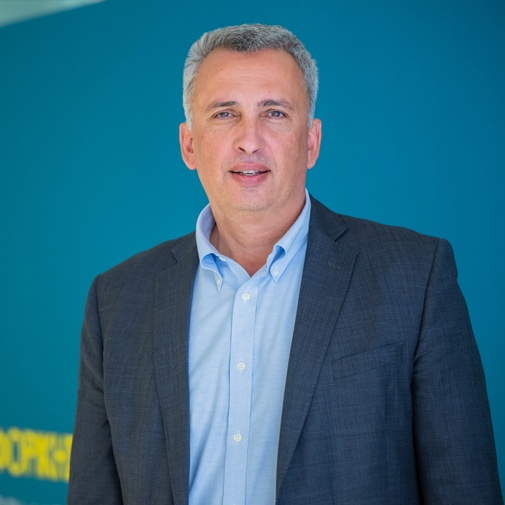
Vangelis Karkaletsis
NCSR Demokritos

NCSR Demokritos · ΕΚΕΦΕ Δημόκριτος

Vangelis Karkaletsis

Research leadership & PHAROS technical coordination

PUBLISHED POSITION / EDITORIAL SUMMARY

Useful public AI requires a path from research to services, with dependable infrastructure and evidence of impact.

Read the source context

Editorial reading of his account of Connect: Proof of Impact, held on 19 May 2026. This is a research-to-service argument, not a claim that every deployment is ready.

Vangelis Karkaletsis · Proof of Impact ↗
Dimitris Papailiopoulos
Microsoft Research

Microsoft Research

Dimitris Papailiopoulos

Machine learning, optimisation & systems

PUBLISHED POSITION / EDITORIAL SUMMARY

More output is not automatically better reasoning: efficiency and accuracy need to be measured together.

Read the source context

Editorial synthesis of the coauthored GFPO paper, August 2025. The results concern specific models and benchmarks; they do not predict a company’s savings.

Microsoft Research · coauthored paper ↗
John Tasioulas
The Lyceum Project · see portrait source

University of Oxford

John Tasioulas

AI ethics & philosophy

PUBLISHED POSITION / EDITORIAL SUMMARY

AI at work should respect the value of work itself and give workers a voice in how it changes.

Read the source context

With Josiah Ober, Work, Play, Reality, 10 June 2024. Their argument connects human flourishing with participation at work.

Oxford · coauthored essay ↗

THOUGHTLEADERS.GR × AISTRATEGY.GR × EVENTCHANGER

A conversation
that stays connected.

Follow a published position through its original source, the Greek question, a practical case and a next step. This collection reads the central ThoughtLeaders feed.

Connecting to the public collection

Checking source availability…

Published perspectives will appear here when the source is available.

Independent public statements, connected editorially. Source dates describe the original publication; they do not imply attendance at a common event.

Open the central source collection ↗

THE MODERATOR’S NOTE / EDITORIAL ANALYSIS

Here is where
the question gets difficult.

Local models can increase research capability and choice. Their usefulness still depends on rights-cleared material, specialist evaluation and the ability to say when evidence is missing.

What evidence would move this forward?

Use domain experts to define acceptable answers, citations and failure categories. Test Greek terminology, mixed scripts, older documents and questions with no supported answer.

Position→Test→Evidence→Decision

TAKE IT INTO REAL WORK

01 / A real case

See what happened—and where the limits are.

Read the evidence ↗
02 / A practical tool

Make the decision concrete for your team.

Open the guided tool ↗
03 / Go deeper

Follow a clear route from question to action.

Read the guide ↗

EVENTCHANGER / THE NEXT QUESTION

Which 30 Greek-language tasks would reveal whether a system understands your field?

Take this prompt to your team, a workshop or a roundtable. Use the brief below to keep the discussion useful after everyone leaves the room.

The EventChanger link opens its related question explorer. Your notes below are not submitted to either platform.

YOUR DISCUSSION BRIEF

Leave with a next step.

Capture what your team needs to learn. Download it and use it to prepare a session. Nothing is sent automatically.